
Navigating international logistics can be tricky, especially when dealing with the many shipping documents. One term that often causes confusion is telex release. A telex release is a carrier’s authorization to release cargo at the destination. It allows the destination agent or carrier to release the cargo without requiring the consignee to present the original Bill of Lading (B/L).
In this article, we’ll break down what a telex release is, how it functions, and what you need to be aware of when handling one.
What is a telex release?
A telex release is an instruction or authorization issued by the carrier, shipping line, or its authorized agent at the port of loading (POL). It authorizes the destination agent or carrier at the port of discharge (POD) to release the cargo without requiring the original Bill of Lading.
In practice, a telex release is normally used after the original B/L has been issued and surrendered to the carrier or its agent.
For example, imagine a container being loaded in Shenzhen, China, while the consignee is located in the UK.
After the shipper surrenders the required original B/L to the carrier in China, the carrier sends a release instruction to its destination office or agent. The agent can then release the cargo in the UK. Once the destination-side requirements are satisfied, the consignee can collect the cargo without presenting the original B/L.
Below, you’ll find a simplified diagram illustrating this process.
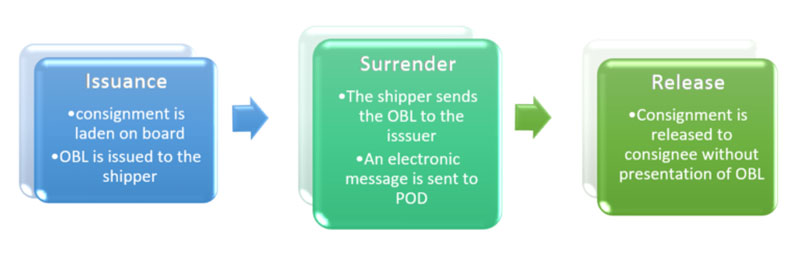
How does a telex release work?
The telex release process generally follows these steps:
- The carrier issues the Original B/L.
After the cargo is loaded, the carrier issues the original Bill of Lading to the shipper.
- The shipper settles the charges.
The shipper pays the required freight charges and completes any necessary documentation.
- The shipper surrenders the Original B/L.
The shipper returns the required original B/L to the carrier or its authorized agent, usually at the port of loading.
- The carrier approves the release.
After confirming the B/L surrender and completing its required checks, the carrier processes the telex release.
- The release instruction is sent to the destination.
The carrier or its agent sends an electronic release instruction to the destination office or agent.
- The consignee collects the cargo.
Once all destination requirements are met, the consignee can collect the cargo without presenting the original B/L.
The exact procedure and required documents may vary by carrier, shipment terms, and destination.
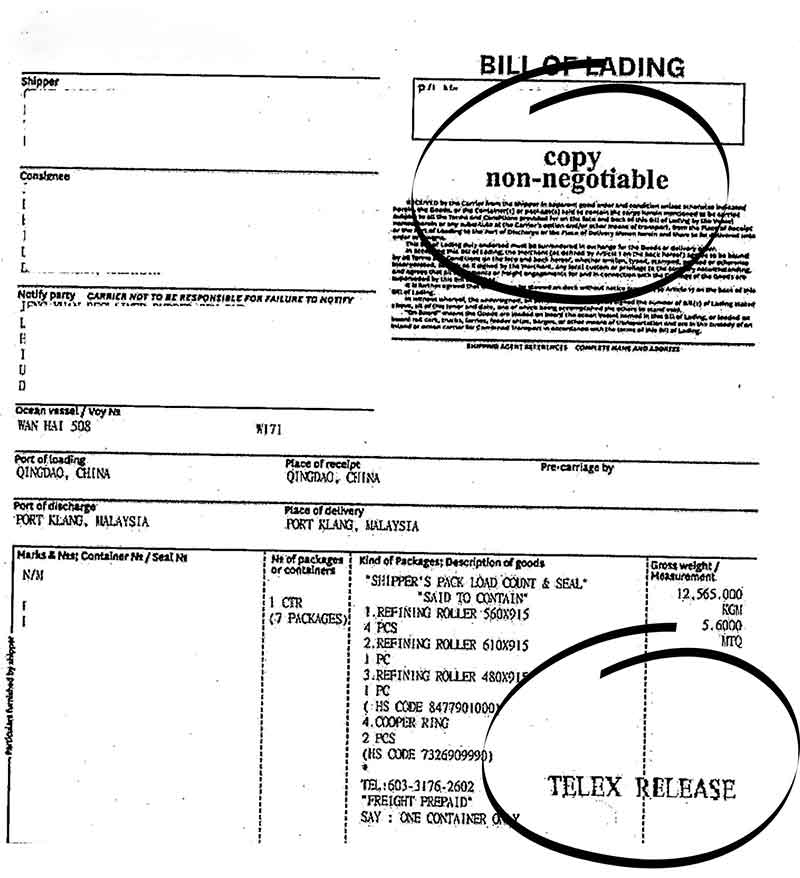
Example of a telex release
What about the Original Bill of Lading?
An Original Bill of Lading (OBL) is a physical document issued by the carrier or its authorized agent. Depending on the type of B/L, it can serve as a receipt for the goods and evidence of the contract of carriage. A negotiable B/L can also serve as a document of title.
The consignee may need to present the required original B/Ls at the destination before the carrier releases the cargo, depending on the shipment terms.
There are, however, situations where the consignee does not need to present an original B/L.
For example:
- The original B/L has been surrendered, and the carrier has issued a telex release.
- A Sea Waybill was issued instead of an Original B/L.
A Sea Waybill is non-negotiable and does not require the surrender of an original B/L for cargo release.
Telex release vs. original B/L
| Feature | Telex Release | Original B/L | |
|---|---|---|---|
| Original B/L issued | Yes, generally | Yes | |
| Original B/L surrendered | Yes | No, when it is used for presentation at destination | |
| Physical document required at destination | No | Generally yes | |
| Cargo release | Based on carrier's release instruction | Based on presentation of the required original B/L | |
| Risk of courier delay | Lower | Higher | |
| Common use | When the shipper wants to avoid sending originals to destination | When physical B/L presentation is required |
Why choose a telex release instead of the original B/L?
A telex release can offer several practical advantages:
- The release is sent electronically, eliminating the risk of lost documents.
- It’s faster, avoiding delays when shipping the physical bill of lading (which could lead to detention or demurrage charges).
- It’s especially beneficial for short voyages, where there isn’t enough time to send the documents by courier.
However, a telex release does not eliminate all risks. The shipper should make sure that the release request is properly authorized and that communications are handled securely. That’s why you should work with Airsupply who has strong cybersecurity measures and protocols to prevent such risks.
Telex release vs. Express release
Telex release and express release are related but not the same.
The key difference lies in whether the shipper receives and surrenders an Original Bill of Lading.
Telex release
A telex release is generally used when:
- An Original B/L has been issued.
- The required original B/L has been surrendered to the carrier.
- The carrier then authorizes cargo release at destination without presentation of the original B/L.
Express release
An express release generally refers to a shipment arrangement in which the carrier does not require presentation or surrender of an Original B/L for cargo release.
One common example is a Sea Waybill. A Sea Waybill is non-negotiable. It does not require the consignee to surrender an Original B/L, so the consignee can normally collect the cargo without presenting one.
For this reason, it is important to confirm the carrier’s terminology before requesting a release. Different carriers may use terms such as Express Release, Sea Waybill, Surrendered B/L, or Telex Release differently.
Telex release vs. Sea waybill
A Sea Waybill and a telex release use different cargo release procedures.
A Sea Waybill is a non-negotiable transport document. It does not require the shipper to issue or surrender an Original B/L. The consignee can normally collect the cargo without presenting an original document.
A telex release, on the other hand, generally starts with an Original B/L. The shipper surrenders the required original B/L to the carrier, which then authorizes cargo release at the destination.
In simple terms:
- Original B/L: The consignee generally presents the required original B/L to collect the cargo.
- Telex Release: The shipper surrenders the Original B/L, and the carrier authorizes the release of the cargo electronically.
- Sea Waybill: The shipper does not need to surrender an Original B/L, so the consignee can normally collect the cargo without presenting one.
Conclusion
Understanding the differences between Telex Release, Original B/L, Express Release, and Sea Waybill can help shippers and consignees choose the right cargo release method. The right choice can help avoid unnecessary delays.
At ASLG, we understand the complexities of international shipping. Whether you need guidance on handling Original Bills of Lading or require assistance with electronic releases, ASLG has you covered.
Our team of experts ensures smooth communication between shippers, consignees, and carriers, helping you avoid delays and reduce costs. Additionally, with our comprehensive global network, we provide customized, efficient logistics solutions tailored to your needs.
FAQs:
Who issues telex releases?
This document is typically issued by the carrier handling the cargo. In cases where a Non-Vessel Operating Common Carrier (NVOCC) is involved, they may also facilitate the process by coordinating with the shipping line to issue the telex release.
How do you send a telex release?
The exact procedure varies by carrier, but the process generally involves:
- Requesting a telex release from the carrier or forwarder.
- Confirming that the required Original B/L has been issued.
- Surrendering the required original B/L to the carrier or its authorized agent.
- Settling any applicable freight and documentation charges.
- The carrier processes the release instruction.
- The destination agent confirms the release and allows cargo collection once local requirements have been completed.
Because carrier procedures differ, it is best to confirm the required documents and fees with the carrier or forwarder before submitting the request.
How do you send a telex release?
Historically, telex releases were sent through telegraph machines, which is how the name “Telex” originated. Today, however, most shipping lines offer the convenience of requesting a telex release through their online platforms, making it much easier and faster to obtain.
Is Sea Waybill the same as telex release?
No. A Sea Waybill is a non-negotiable document that acts as both a contract of carriage and a receipt for the goods, but it does not need to be physically presented to release the cargo. The consignee can claim the goods without an original document.
The simplest way to remember the difference is:
Original B/L issued → surrendered → Telex Release
No Original B/L issued → Sea Waybill/Express Release
Always confirm the carrier’s specific terminology and procedures, as release practices can vary between carriers and shipment types.