
A machine can leave a factory in perfect condition yet arrive damaged because its packaging cannot withstand the journey.
Export crating provides structural protection for heavy, fragile, or high-value cargo during international transportation. A properly designed crate helps keep goods secure through lifting, loading, and repeated handling.
Importers sourcing machinery or industrial equipment from China should consider packaging requirements before the supplier releases the goods for shipment.
When Is Export Crating Necessary?
Not every shipment needs a wooden crate. Standard cartons or pallets may be sufficient for durable, regularly shaped goods. Crating becomes more important when cargo has:
- Heavy or uneven weight distribution, such as machinery with a concentrated load.
- Fragile or exposed components, including glass panels, instruments, and precision equipment.
- Irregular dimensions that complicate lifting, handling, or stacking.
- Sensitive surfaces that require protection against impact, dust, or moisture.
A suitable crate must support the cargo’s weight and keep it secure. Even a sturdy wooden enclosure offers limited protection if the equipment can move inside.
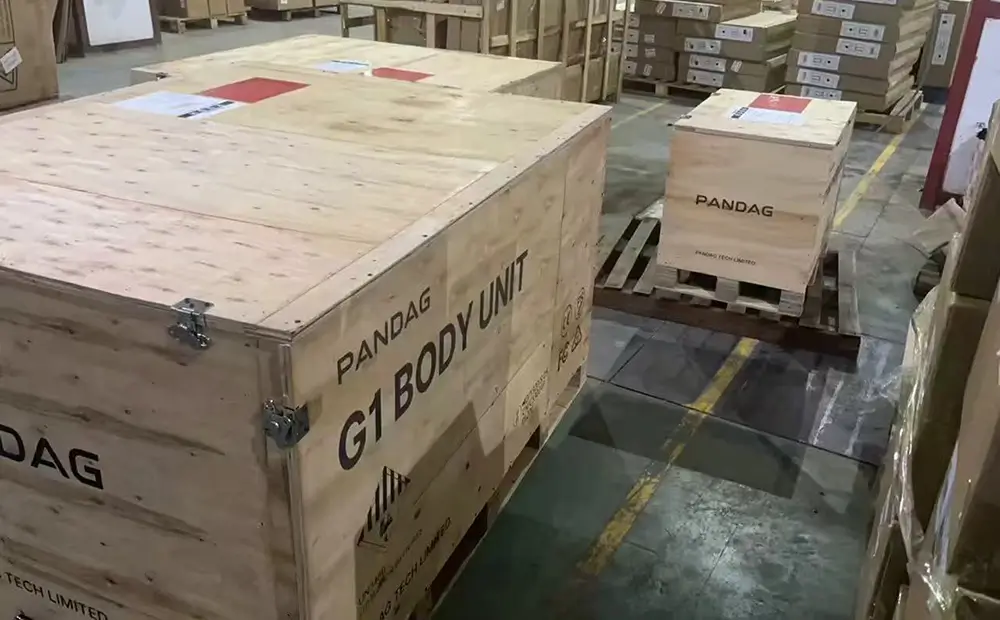
Solid Wood vs. Plywood Export Crates
Both solid wood and plywood are used in export packaging, but they have different construction methods and regulatory requirements.
| Crate type | Key considerations |
|---|---|
| Solid wood | Provides structural strength for heavy-duty applications. Regulated solid wood components generally require ISPM 15 treatment and marking. |
| Plywood | Often offers a lighter option for enclosed crates. Qualifying processed plywood generally falls outside ISPM 15 treatment requirements. |
| Mixed materials | Combines plywood panels with solid wood frames or skids. Any regulated solid wood components must still meet applicable requirements. |
A crate made from plywood panels does not qualify for an exemption if its frame or base includes regulated solid wood.
When selecting a wooden crate for international shipping, check the destination country’s import rules before production begins. Our ISPM 15 guide covers wood packaging treatment, IPPC markings, and common exemptions.
Protecting Crated Cargo During International Shipping
A sturdy wooden frame alone cannot protect cargo from every risk. Export crates must also withstand handling, vibration, movement, and environmental conditions throughout the journey.
Sea freight brings particular moisture concerns. Temperature changes can cause condensation inside containers, putting exposed metal surfaces and sensitive components at risk. Moisture barriers, desiccants, or corrosion protection may help protect susceptible goods.
Air freight requires a different balance. Crate weight and dimensions directly affect shipping costs, while aircraft loading restrictions may limit the size or type of packaging a carrier accepts.
Regardless of the transport method, the crate needs a stable base, suitable lifting points, and internal restraints that prevent cargo from shifting. Heavy or irregularly shaped equipment also requires careful attention to its center of gravity and handling method.
Export Packing Requirements Before Shipping
Before your supplier closes the crate, check the following:
- Cargo specifications: Actual weight, dimensions, and center of gravity where relevant.
- Crate construction: External dimensions, gross weight, base design, and internal supports.
- Wood packaging compliance: Applicable ISPM 15 treatment and markings for regulated solid wood.
- Cargo protection:Suitable cushioning, internal restraints, and moisture protection.
- Handling details:Forklift access, lifting points, and orientation markings where necessary.
- Packing photos:Images showing the cargo and internal supports before sealing.
The final packing list should match the actual package count, dimensions, and gross weight. Accurate details help the freight forwarder calculate shipping costs and check loading requirements.
Preparing Crated Cargo for Shipment from China
Packaging issues are easier to fix at the supplier’s factory than at the departure terminal, where repacking can increase costs and delay shipment.
Confirm the packing method early, especially for machinery, precision instruments, or unusually shaped equipment.
Before booking, share your cargo’s weight, dimensions, packing photos, and handling requirements with ASLG. These details help us assess shipping options and identify potential restrictions.
Whether you choose air freight or our sea freight services, the crate must meet the cargo’s handling needs and applicable transport requirements.