
A machine can fit inside a shipping container and still be unsafe to transport. If it shifts during braking, handling, or rough seas, it can damage the container, nearby cargo, or the machine itself.
Cargo lashing uses restraints to control this movement. For heavy machinery, vehicles, and irregular loads, the securing method matters as much as the equipment carrying the goods.
What is cargo lashing?
Cargo lashing means securing goods with straps, chains, wire ropes, or similar restraints during transportation. It helps prevent cargo from sliding, tipping, or moving away from its intended position.
Lashing is an essential part of cargo securing, which may also include blocking, bracing, friction materials, and appropriate load supports.
The right arrangement depends on several factors: cargo weight, dimensions, center of gravity, available attachment points, and the forces the shipment may encounter.
Pallet wrapping or ordinary packaging alone may not provide enough restraint for heavy or unstable cargo.
How cargo lashing works
Different lashing techniques prevent cargo movement in different ways. Depending on the load, securing teams may combine several methods to provide adequate restraint.
Direct lashing
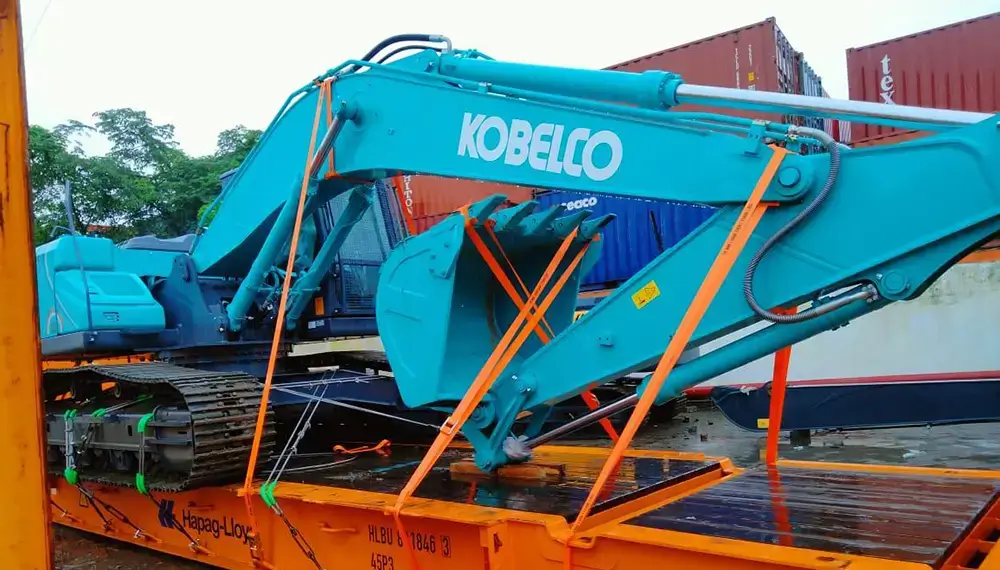
Direct lashing uses straps, chains, or other restraints to connect suitable securing points on the cargo to anchor points on the container, trailer, or transport platform.
These restraints limit movement in specific directions. Their effectiveness depends on the lashing angles, rated capacities, and strength of the securing points at both ends.
This method often suits heavy machinery with suitable securing points.
Tie-down lashing
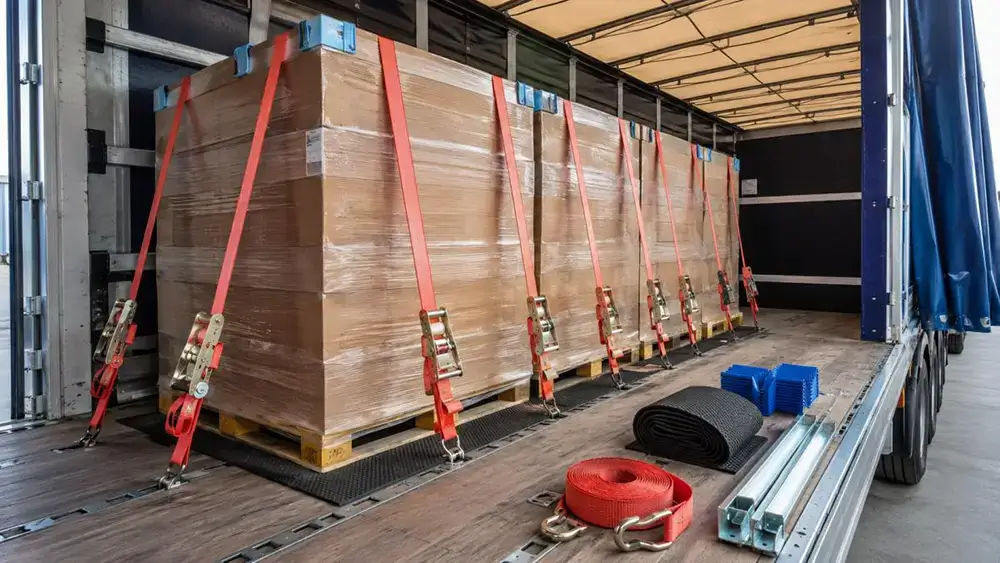
Tie-down lashing passes restraints over the cargo to increase downward pressure and friction between the load and its supporting surface.
Its effectiveness depends on surface friction and the tension the restraints maintain during transport.
For heavy machinery with a high center of gravity, tie-down lashing alone may not adequately prevent sliding or tipping.
Blocking and bracing
Blocking and bracing complement lashing by using timber, structural supports, or other suitable materials to restrict cargo movement.
For example, a machine may need blocks around its base alongside direct lashings attached to approved securing points.
The supports must withstand the expected forces without damaging the cargo or exceeding the container floor’s load limits.
Lashing equipment and its uses
Choosing a restraint involves more than matching its size to the cargo’s weight. Check the equipment’s rated capacity, condition, and suitability for the planned securing arrangement.
| Equipment | Common use |
|---|---|
| Polyester straps | Suitable for packaged loads and equipment with compatible securing points |
| Steel chains | Heavy machinery and robust cargo attachment points |
| Wire ropes | Selected heavy or irregular loads |
| Tensioners and binders | Applying and maintaining appropriate restraint tension |
| Edge protectors | Protecting cargo surfaces and restraints from damage |
| Anti-slip mats | Increasing friction beneath suitable cargo |
| Blocking materials | Restricting movement at the cargo base |
A restraint’s rated strength does not determine the entire system capacity. Anchor points, lashing angles, cargo supports, and the supporting structure also affect how much force the arrangement can withstand.
Avoid attaching restraints to lifting points unless the equipment manufacturer also approves those points for securing. Lifting and transport restraints may place different forces on the same component.
Securing cargo in containers and on flat racks
Standard containers, flat racks, and trucks have different securing points and structural limits. Each requires a suitable cargo securing approach.
Inside a standard container
Heavy cargo needs proper support and balanced weight distribution across the container floor.
Loading teams may combine blocking, bracing, and lashings to prevent movement while staying within the container’s structural limits.
Machinery with a narrow base or uneven weight distribution may also need additional support to reduce the risk of tipping.
On a flat rack
Flat racks carry oversized machinery and industrial equipment that cannot fit inside standard enclosed containers.
Without full side walls, they rely on suitable anchor points, cargo supports, and properly arranged restraints to keep the load secure.
For more details on equipment selection and loading considerations, see our flat rack container guide.
During inland transportation
Cargo typically travels by truck from the departure port in China to the arrival port, and then to its final destination.
Braking, acceleration, and cornering create forces that differ from those encountered at sea.
When cargo moves between trucks, containers, or other transport equipment, the loading team must check whether the existing restraints remain suitable and adjust them when necessary.
Preparing cargo for shipment from China
Before booking transportation, confirm how the supplier will pack and secure the cargo. For heavy machinery or irregular loads, weight and dimensions alone may not provide enough information to plan a suitable securing arrangement.
Ask your supplier for:
- Gross weight and packed dimensions
- Center of gravity, where relevant
- Photos or drawings of the cargo base and supports
- Approved lifting and securing points
- Packing method and support structure
- Manufacturer restrictions on handling or securing
These details help identify potential loading issues and determine whether the cargo needs additional supports or a specific securing arrangement.
The IMO/ILO/UNECE CTU Code provides guidance on packing and securing cargo transport units. Loading arrangements must also comply with applicable regulations, carrier requirements, and equipment limitations.
Complex or unusually heavy loads may require a qualified specialist to develop and verify a cargo-specific securing plan.
If your shipment involves oversized machinery or unusual loading requirements, explore ASLG’s logistics solutions to understand the available transport arrangements. For containerized shipments, our sea freight services cover ocean transportation from China.