
A cold chain data logger records temperature changes during transit. It helps shippers and importers see whether temperature-sensitive cargo stayed within its required range.
For international shipments, the challenge involves selecting the right logger. The device must record the right conditions, survive the journey, and provide usable data when the cargo arrives.
Table of Contents:
How Does a Cold Chain Data Logger Work?
A temperature data logger measures and stores readings at preset intervals. Each reading includes a timestamp, so the receiver can see when temperatures changed and how long those conditions lasted.
Most shipping loggers fall into two categories:
- USB data loggers store readings for download after delivery. They are common in one-way shipments.
- Wireless data loggers can transmit readings during transit, depending on network availability and device restrictions.
Some devices are single-use, while others can be reset and reused.
A logger does not cool or protect the cargo. It records conditions so the shipper can evaluate what happened during transport.
Choosing a Temperature Logger for International Shipping
The best choice depends on the cargo’s sensitivity, journey length, and monitoring requirements.
| What to Consider | Why It Matters |
|---|---|
| Temperature range | The device must measure the temperatures relevant to the cargo |
| Accuracy | Readings must meet the product's monitoring requirements |
| Recording interval | Frequent readings provide more detail but use more storage and battery |
| Battery life | The logger must last through transit and possible delays |
| Data access | The receiver needs a practical way to retrieve the report |
| Calibration | Some products require documented measurement accuracy |
For a routine one-way shipment, a USB logger may provide everything the receiver needs. If someone must respond to temperature changes before arrival, a device with remote reporting may be more appropriate.
Additionally, for air freight, wireless devices must comply with the relevant airline and battery regulations.
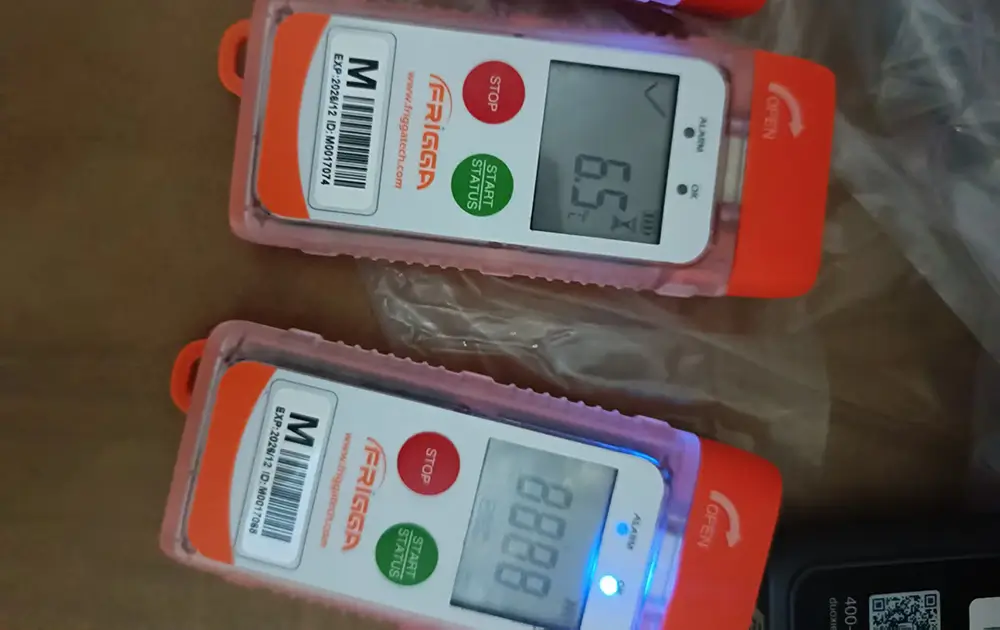
Where Should You Place a Data Logger?
Proper sensor placement is crucial for accurate readings. When a sensor is located near a cooling element, it may record lower temperatures than what the cargo actually experiences. Likewise, a sensor placed outside an insulated box will not accurately reflect the conditions inside it.
For small packages, monitoring may take place inside the packaging. Palletized loads and refrigerated containers, however, may need multiple sensors to capture variations across the shipment.
The best locations depend on packaging, monitored conditions, and any available temperature-mapping results.
Document each sensor’s location and identification number so the receiving team can interpret the data accurately after delivery.
Setting Up a Logger Before Shipping
Prepare the device before your supplier seals the cartons or loads the cargo. Set the recording interval according to the product’s required temperature range, then check battery life, storage capacity, and calibration status where applicable.
Once activated, verify that the logger is recording correctly. The shipper and receiver should also agree on who will retrieve the data at destination and how to access the report. This avoids confusion when the goods arrive.
How to Read a Temperature Logger Report
Once the shipment arrives, the receiver can download the temperature history and review the readings against the specified limits.
Rather than focusing only on the highest and lowest values, pay attention to how long any excursion lasted. A shipment requiring 2°C to 8°C might briefly reach 9°C. While this exceeds the permissible range, it does not necessarily indicate that the goods are damaged.
The significance of an excursion depends on the product’s stability data, the duration of exposure, and the sensor’s location. Readings taken from the surrounding air may also change faster than the temperature inside insulated packaging.
Temperature Monitoring for Shipments from China
Effective temperature monitoring begins before departure. Factors such as packaging, transit time, transport conditions, and handling during transfers all impact the risks associated with sensitive cargo.
When arranging freight from China, share the product’s required temperature range, destination, and any specific monitoring instructions. This helps ASLG identify suitable temperature-controlled shipping options for your shipment.