
Deconsolidation is the process of breaking down a consolidated shipment, usually involving LCL (Less than Container Load) cargo. At origin, freight forwarders consolidate multiple LCL shipments into a single container. Upon arrival at the destination, they deconsolidate the cargo into individual consignments for customs clearance and final delivery. It involves separating the goods by consignee and preparing each for its final destination.
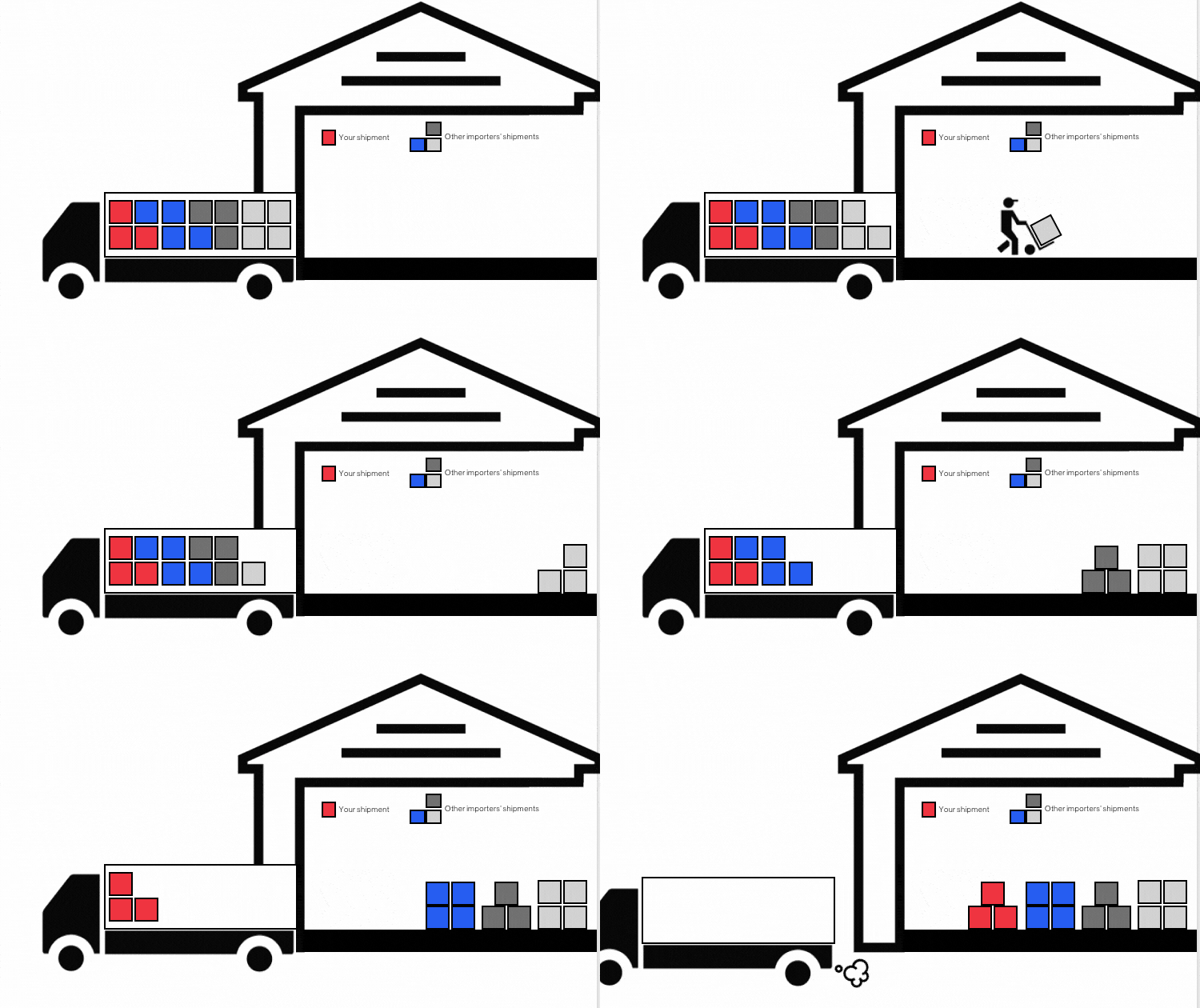
How Does Deconsolidation Work?
The exact steps depend on the transport mode and shipping arrangement. A typical process includes:
1. Consolidated Cargo Arrives
The combined load arrives at the destination facility.
2. The Load Is Unloaded
The container or transport unit is opened, and the cargo is unloaded for handling.
3. Individual Shipments Are Separated
Each consignment is identified and sorted according to its shipping documents and destination.
4. Cargo Moves Onward
After the required release procedures, each shipment can continue to its consignee or final delivery point.
CONSOLIDATED LOAD → UNLOAD → SEPARATE → RELEASE → ONWARD DELIVERY
Consolidation vs. Deconsolidation
These two terms describe opposite parts of the freight process.
Consolidation
Deconsolidation
In simple terms, consolidation brings shipments together. Deconsolidation separates them at the other end.
Where Does Deconsolidation Take Place?
For LCL sea freight, deconsolidation commonly takes place at a destination Container Freight Station (CFS). After the container arrives, the individual LCL shipments are unloaded and separated.
A Container Freight Station may also handle storage, documentation, and cargo release.
Other types of consolidated freight may follow a different process. The location and handling steps depend on the transport arrangement.
Why Does Deconsolidation Matter?
Cargo that travels together does not always have the same consignee or final destination. Deconsolidation separates each consignment so it can move independently.
Identify the Cargo
Match each consignment with the correct shipping documents and consignee.
Prepare for Release
Complete the required destination procedures before the cargo moves onward.
Continue to Delivery
Send each released shipment toward its final delivery point.
Deconsolidation may involve several destination charges, such as:
- Unloading
- Cargo sorting
- CFS handling
- Documentation
- Storage, when applicable
Charges vary by destination, facility, cargo, and shipping arrangement.
For LCL freight, check possible destination charges as well as the international freight rate before booking.
1. Is deconsolidation the same as unloading?
No. Unloading means removing cargo from a container or transport unit. Deconsolidation also separates the combined cargo into individual consignments.
2. What is the difference between consolidation and deconsolidation?
Consolidation combines smaller shipments for transportation. Deconsolidation separates them after arrival so each shipment can move independently.
3. Where does LCL deconsolidation take place?
LCL deconsolidation commonly takes place at a destination Container Freight Station. The exact arrangement depends on the shipment and destination.
ASLG can receive cargo from multiple suppliers in China and combine suitable shipments before international transportation.
Explore our warehousing and cargo consolidation services for multi-supplier shipments.