
What is the commercial invoice for shipping? It is a document that an exporter issues to record the goods, value, and transaction details of an international shipment. Customs authorities use it to identify the goods, review their declared value, and assess applicable duties and taxes.
For importers buying from China, accurate invoice details help avoid customs questions, document corrections, and unnecessary clearance delays.
Proforma invoice vs commercial invoice: what's the difference?
A proforma invoice (PI) outlines a proposed transaction before the sale is finalized. It usually lists the products, quantities, estimated prices, and payment terms.
A commercial invoice records the actual sale and provides shipment details for customs clearance.
| Proforma Invoice | Commercial Invoice |
|---|---|
| Outlines a proposed transaction | Records the actual sale |
| Shows estimated prices and terms | Shows agreed prices and transaction details |
| Helps buyers review an order | Supports customs declarations and import clearance |
For free samples and other non-sale shipments, customs authorities or carriers may accept a proforma invoice, depending on the destination’s requirements.
Learn more in our Proforma vs. Commercial Invoice Guide.How to Fill Out a Commercial Invoice
Your Chinese supplier or exporter normally prepares the commercial invoice. Before shipment, check these details:
- Seller and buyer: Include full company names, addresses, and relevant contact information. Add importer or consignee details if they differ.
- Invoice number and date: Use a unique invoice reference and the correct issue date.
- Product description: Identify each product clearly, including material, model, or intended use where relevant.
- Quantity and value: Show the quantity, unit price, total value, and currency for each product.
- Country of origin: State where the goods originate, which may differ from the shipping country.
- HS code: Include the appropriate product classification where required.
- Shipping and trade details: Add applicable Incoterms, reason for export, and other information required by the destination or carrier.
Check the invoice against the packing list and other shipping documents. Product descriptions, quantities, and shipment details should remain consistent.
Commercial Invoice for Samples
Importers often request product samples from Chinese manufacturers before placing a larger order. These shipments still need accurate customs documentation, even when the supplier provides the goods free of charge.
Paid Samples
If you purchase samples, the commercial invoice should show the actual transaction value, quantity, product description, and currency.
Free Samples
For free samples, your supplier may prepare a commercial or proforma invoice according to the destination’s customs requirements and the carrier’s rules.
Do not automatically declare free samples at zero value. Customs authorities may require a supportable value even when no payment takes place.
For example, if a Chinese manufacturer sends five stainless steel product samples for evaluation, the invoice should identify the products rather than simply state “samples.”
The supplier can also add a statement such as:
Free samples for evaluation, not for resale. Value declared for customs purposes only.
This wording explains the shipment’s purpose but does not remove customs valuation requirements or guarantee a duty exemption.
Commercial invoice sample
The example below shows how to organize a commercial invoice for international shipping.
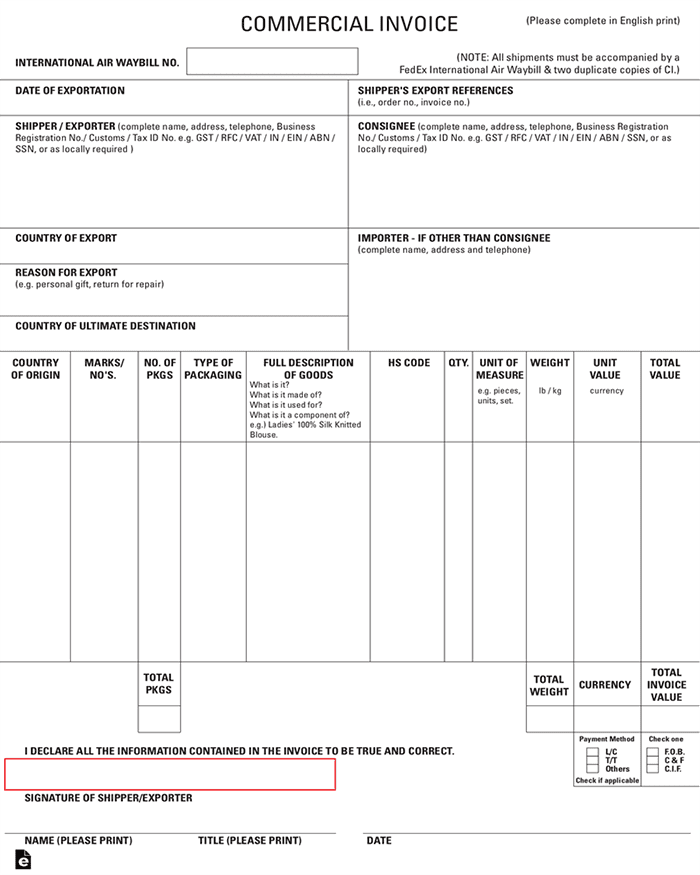
Use this sample as a reference when reviewing your Chinese supplier’s invoice. The format may vary, but the details must accurately reflect your shipment and meet the destination’s customs requirements.
Conclusion
Before shipping goods or samples from China, ask your supplier to check the commercial invoice against the actual shipment. Accurate product descriptions and values matter more than the invoice’s layout.
ASLG can review shipment details and identify document inconsistencies relevant to freight arrangements.